Season 15, Season of Hell’s Legacy, is taking Diablo on a trip through its own history. Waking Nightmares are the centerpiece of that idea, bringing recreated moments from previous Diablo games into Diablo 4’s visual style.
There’s a slightly bittersweet side to all of this, though. Season 15 is framed as a celebration of Diablo’s history, but it also arrives with the knowledge that it marks the end of Diablo 4. If Blizzard is going to close this chapter, revisiting some of the series’ most memorable moments is certainly one way to do it.
Waking Nightmares aren’t one single activity, either. Season 15 contains roughly 30 Nightmare experiences, ranging from massive multi-stage adventures to quick encounters that can interrupt your normal exploration of Sanctuary. The activities are split into three categories:
- Prime Evil Waking Nightmares
- Standard Waking Nightmare dungeons
- Pop-up Waking Nightmares
And these aren’t temporary throwaway events. Waking Nightmares remain available after Season 15 and become part of Diablo 4’s core activity lineup.
Prime Evil Waking Nightmares
The biggest Waking Nightmares recreate major journeys from the older Diablo games, with each one building toward one of the three Prime Evils: Diablo, Baal, and Mephisto.
You encounter these versions during the Season 15 questline. Later, harder versions become available as Capstone Dungeons, while Blizzard has also added Pinnacle Capstones, described as the largest and hardest dungeons the Diablo 4 team has created. These are designed around Torment 10 and higher.
Each Prime Evil Nightmare has its own route and pays tribute to a different part of Diablo history.
Baal Waking Nightmare
Baal’s Nightmare recreates the final stretch of Diablo 2: Act V.
The run starts in Ancients’ Way, leading toward Arreat Summit, where you’ll face the Ancients. From there, the journey moves into the Worldstone Keep, eventually reaching Baal’s famous wave encounters.
Once the waves are cleared, players enter the portal and finally confront Baal.
The full progression is:
Ancients’ Way → Arreat Summit → The Ancients → Worldstone Keep → Baal Waves → Baal
It’s one of the longest nostalgia-focused experiences in Season 15, and it recreates the structure of Diablo 2’s original finale rather than simply dropping a familiar boss into a new dungeon.
Mephisto Waking Nightmare
Mephisto’s Nightmare takes players back to the conclusion of Diablo 2: Act III.
The adventure begins in Travincal, where you’ll need to rebuild Khalim’s Will by recovering its four components:
- Khalim’s Heart
- Khalim’s Eye
- Khalim’s Brain
- Khalim’s Flail
Once the weapon is complete, it can be used to destroy the Compelling Orb. That opens the path into the Durance of Hate, where the run eventually ends with a confrontation against Mephisto.
The route is:
Travincal → Khalim’s Will → Compelling Orb → Durance of Hate → Mephisto
It takes one of Diablo 2’s most recognizable quest sequences and rebuilds it as a Diablo 4 activity.
Diablo Waking Nightmare
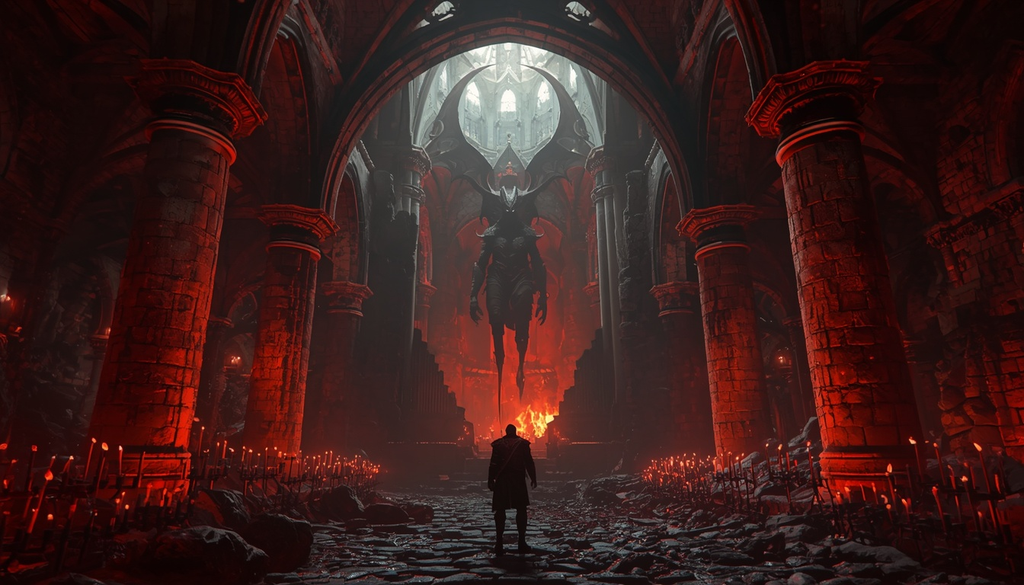
Diablo’s Nightmare is the biggest of the three Prime Evil recreations. Blizzard describes it as covering almost the entirety of the original Diablo 1.
The journey begins in the Tristram Cathedral, then pushes through the classic dungeon layers:
Cathedral → Catacombs → Caves → Hell → Diablo
Eventually, players descend all the way into Hell itself to face Diablo.
Of the three Prime Evil Waking Nightmares, Blizzard’s developers specifically called this one out as one of their most ambitious recreations.
Waking Nightmare Capstones
The Prime Evil versions don’t end with the seasonal questline.
After completing the story versions, players can return to these encounters through harder Capstone Dungeon versions. Season 15 also adds Pinnacle Capstones, which Blizzard describes as the biggest and toughest dungeons its team has created.
These Pinnacle versions are balanced around Torment 10 and above.
One important distinction: Pinnacle Capstones aren’t a fourth category of Waking Nightmare. Blizzard identifies only three Waking Nightmare types. Pinnacle Capstones sit at the difficult end of the endgame progression connected to the Prime Evil encounters.
Standard Waking Nightmare Dungeons
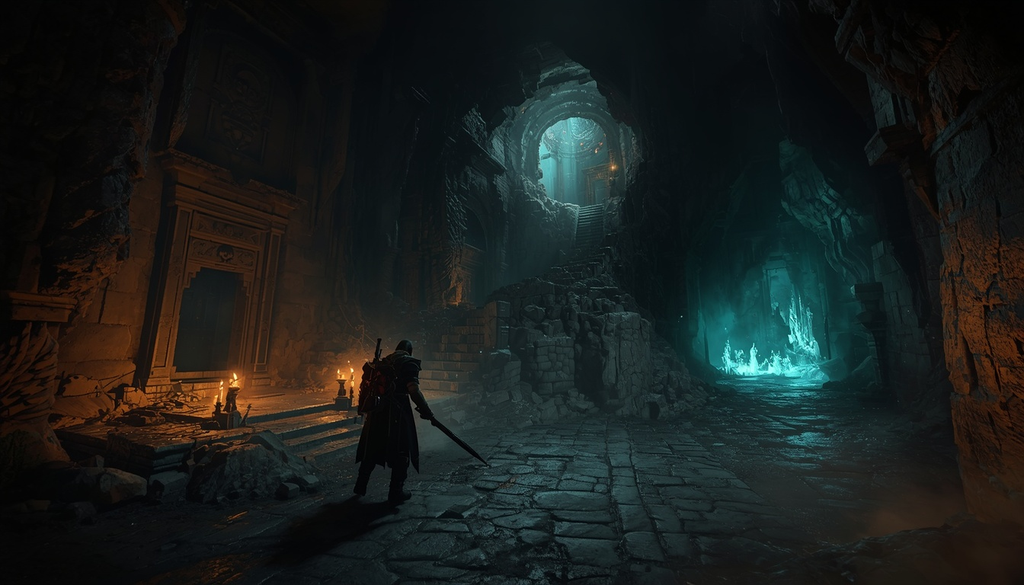
The second Waking Nightmare category consists of roughly 10 normal-sized dungeons scattered across Sanctuary.
These work much like regular Diablo 4 dungeons. Their entrances can be found in the world, players enter them normally, and Nightmare Dungeon Keys can be used with them. Inside, you’ll encounter recreated moments from earlier Diablo games.
Unlike the Prime Evil versions, these dungeons don’t attempt to reproduce entire acts. Instead, each one focuses on a specific location, quest, or memorable sequence.
Tal Rasha’s Tomb
One of the returning locations is Tal Rasha’s Tomb from Diablo 2.
The sequence centers around the Horadric Staff. Players assemble it, place it on its pedestal, and open the hidden chamber.
The original Diablo 2 sequence takes players through the Arcane Sanctuary and Canyon of the Magi, where they must identify the correct tomb among seven possible entrances. Inside, the completed staff is placed into a special altar, opening the way forward.
Baal is already gone by this point, leaving players to face Duriel instead.
The combination of the seven tombs, the Horadric Staff puzzle, and the sudden boss encounter makes this one of Diablo 2’s most recognizable Act II sequences.
Scouring of Caldeum
Another Nightmare recreates Scouring of Caldeum from Diablo 3: Act II.
The sequence takes place during the fall of Caldeum. Players fight through the city alongside Leah, cutting through demons, rescuing civilians, and advancing toward the Imperial Palace.
The sequence ultimately leads to Emperor Hakan II, whose true identity as Belial, the Lord of Lies, is revealed.
It’s one of Act II’s defining moments because it combines a large-scale battle through the city with the payoff to Belial’s deception.
Den of Evil
The Den of Evil brings one of Diablo 2’s earliest locations into Diablo 4.
It was the first quest in Diablo II, given by Akara at the Rogue Encampment. Players enter the cave in the Blood Moor and have one simple objective: kill everything inside.
That includes Fallen, Fallen Shamans, Zombies, and the Super Unique zombie Corpsefire.
Once every enemy is dead, the cave fills with light and Akara rewards the player with a Skill Point.
It’s a small quest by Diablo’s standards, but almost every Diablo II player remembers it. As an introduction to combat and exploration, the Den of Evil is about as classic as it gets.
Halls of the Blind
Diablo 1 gets its own callback through Halls of the Blind.
This optional quest is found on dungeon level 7 and begins after reading the Book of the Blind. Doing so opens a sealed chamber filled with Illusion Weavers.
These enemies become invisible while moving and reveal themselves when they attack, turning the room into an ambush.
The objective is to survive the encounter and recover the Optic Amulet.
The quest is particularly memorable because of its creepy poem, which Blizzard also referenced during the BlizzCon panel.
Pop-Up Waking Nightmares
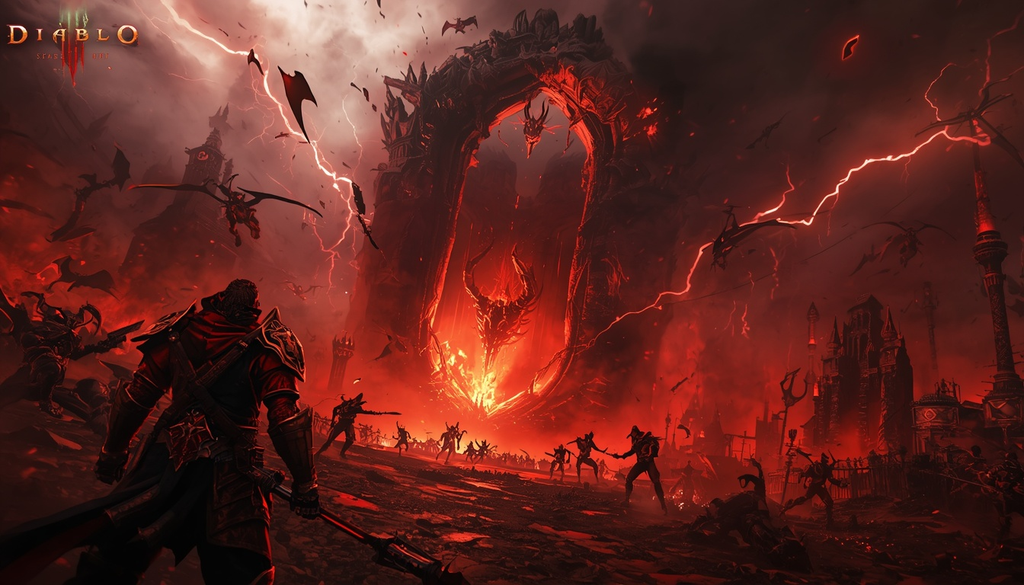
The third category is much more spontaneous.
Pop-up Waking Nightmares can appear while you’re already exploring Sanctuary, turning ordinary world activity into a short trip back through Diablo history.
Imagine fighting through a Helltide when a portal suddenly appears nearby. Enter it, and you’re dropped into a short Waking Nightmare encounter.
These events can include:
- Wave events
- Boss fights
- Short quests
- Recreations of memorable Diablo moments
Blizzard tested an early version of this concept through the Challenge Rifts seen on the test server. Season 15 includes roughly 15 pop-up Waking Nightmares.
Pandemonium
One of these encounters returns to Pandemonium from Diablo 2.
The event centers around fighting enemies outside the Soul Prison.
Na-Krul
Na-Krul from Diablo: Hellfire also returns.
This is one of the deeper cuts in Season 15, since Hellfire was the original Diablo’s expansion rather than one of the mainline Diablo releases.
Zaka the Abyssal Worm
Season 15 also reaches into Diablo Immortal.
Zaka the Abyssal Worm appears in the Realm of Damnation as another pop-up Waking Nightmare encounter.
Classic Bosses and Monsters Return
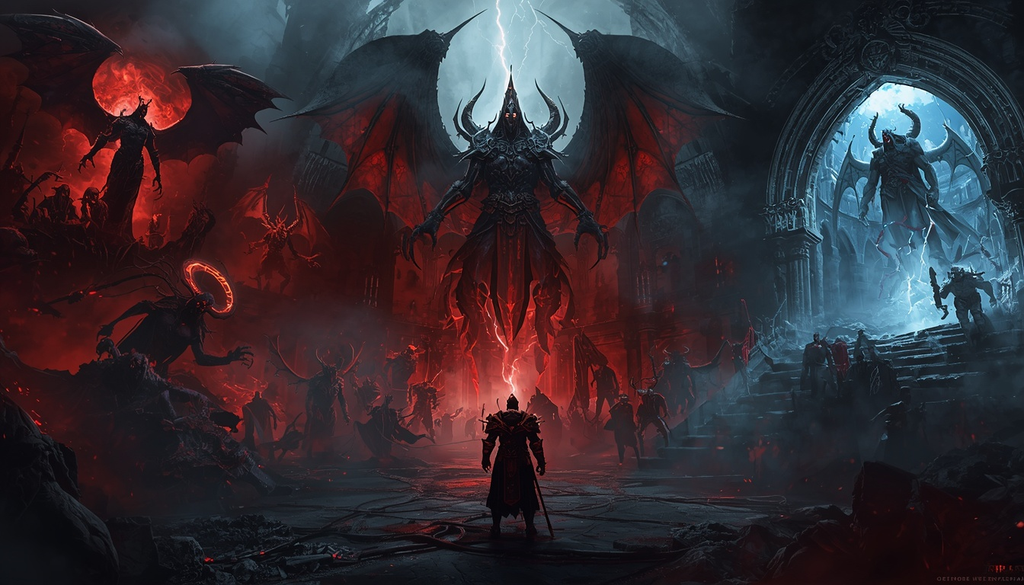
The nostalgia isn’t limited to locations.
Blizzard created 20 bosses and 25 monsters for Season 15’s recreated encounters, bringing plenty of familiar enemies back into the spotlight.
Confirmed returning bosses include:
- Blood Raven
- Queen Araneae
- Archbishop Lazarus
- The Summoner
- Nihlathak
- Coldworm the Burrower
These bosses appear alongside recreated environments pulled from different games in the series.
Classic enemy types are returning as well. The Maggot Lair, for example, features familiar threats such as lightning-enchanted scarabs and resource-draining fly swarms.
So while the locations provide the scenery, the returning enemies are doing plenty of the heavy lifting when it comes to making these encounters feel familiar.
Familiar Diablo Characters Are Back Too
Waking Nightmares also bring back characters from previous Diablo games.
Confirmed appearances include:
- Pepin
- Griswold
- Adria
- Tyrael
- Leah
Blizzard didn’t simply recreate their character models, either. The developers also brought back original voice lines and music from earlier Diablo games.
That means characters such as Tyrael can appear in Diablo 4’s recreated environments while using dialogue from their original appearances.
It’s a small detail, but hearing those familiar voices and musical cues inside Diablo 4 is a big part of what makes these encounters work as historical recreations rather than simple remixes.
How Waking Nightmares Work Across Season 15
The three Waking Nightmare categories serve very different purposes.
Prime Evil Waking Nightmares are the major story and endgame experiences. They recreate long journeys that ultimately lead to Diablo, Baal, or Mephisto.
Standard Waking Nightmare dungeons are smaller and work more like traditional Diablo 4 dungeons, focusing on individual locations and quest sequences.
Pop-up Waking Nightmares are short events that can appear during normal exploration, dropping players into unexpected recreations of classic Diablo moments.
Put together, that’s around 30 recreated Diablo experiences.
The system therefore touches much more than the season’s nostalgia factor. Waking Nightmares connect the seasonal storyline with dungeon content, open-world events, returning bosses, classic characters, and the endgame progression system.
Waking Nightmare Rewards
There’s more reason to run these activities than simply seeing old Diablo locations in a new engine.
The larger Waking Nightmares are directly tied to Season 15’s progression, and they can be replayed for increasingly valuable rewards.
During the seasonal questline, completing the Prime Evil Waking Nightmares awards Splinters of Evil connected to Diablo, Baal, and Mephisto.
The Splinter you choose affects several parts of your seasonal progression:
- Your Iconic Power
- Your reputation track
- War Plan modifiers
- Associated rewards
The choice isn’t permanent. If you later decide to follow another Prime Evil, you can return to the largest Waking Nightmares and obtain a different Splinter.
The encounters also remain useful after the initial story run. Their Torment versions can be replayed for rewards, while Pinnacle Capstones become available at Torment 10+, offering larger loot payouts in exchange for much higher difficulty.
Standard Waking Nightmare dungeons also support Nightmare Dungeon Keys, which makes them part of regular Nightmare Dungeon progression and farming.
Splinters of Evil Explained
Splinters of Evil are the main seasonal progression mechanic tied to the largest Waking Nightmares in Season of Hell’s Legacy.
There are three of them, each connected to one of the Prime Evils. Carrying one allows your character to wield part of that demon’s power.
During the Seasonal Questline, you’ll collect all three by defeating the Prime Evil echoes at the end of their respective Waking Nightmares:
- Diablo beneath Tristram Cathedral
- Baal at Arreat Summit
- Mephisto inside the Durance of Hate
Once you’ve obtained them, you choose which Splinter to bear.
Each one provides an Iconic Power based on its Prime Evil. The effect periodically erupts from your character during combat, giving you a signature piece of that boss’s power.
| Splinter of Evil | Prime Evil | Iconic Power Damage | Activities It Modifies |
|---|---|---|---|
| Splinter of Terror | Diablo | Fire | Helltide, Infernal Hordes |
| Splinter of Destruction | Baal | Cold | The Undercity, Lair Bosses |
| Splinter of Hatred | Mephisto | Physical | The Pit, Nightmare Dungeons |
All three Splinters can also modify Tree of Whispers activities.
Choosing one therefore affects more than your combat effect. Each Prime Evil has its own reputation track, which controls the seasonal progression and rewards associated with that path.
Every track contains:
- 8 activity modifiers
- 6 Iconic Power upgrades
As you progress, the corresponding Prime Evil ability becomes stronger.
Your Splinter also changes related activities through War Plans, giving Diablo, Baal, and Mephisto their own endgame routes.
There is a trade-off, though.
Carrying a Splinter transforms your character into a Dark Wanderer and makes you more vulnerable to the Prime Evil connected to the power you’re using. The Prime Evils can also pursue you while you wield their abilities.
So the system isn’t simply handing out free power. You’re gaining a strong seasonal ability while accepting additional danger from the corresponding Prime Evil.
And if you change your mind, you’re not locked into the decision. Return to the largest Waking Nightmares to obtain another Splinter of Evil and switch to a different Prime Evil’s reputation track, powers, and rewards.
That also gives the biggest Waking Nightmares a reason to remain relevant after you’ve completed them once.
Don’t Confuse Splinters of Evil With Soul Splinters
One final point is worth clearing up because the names are easy to mix up.
Splinters of Evil are the three major seasonal artifacts tied to Diablo, Baal, and Mephisto. You can bear only one at a time.
Soul Splinters are a completely separate seasonal system. These are socketable seasonal gems associated with demons such as Andariel, Duriel, Belial, and Lilith, and you can equip up to three of them in Jewelry slots.
If you’re looking for the Soul Splinters system specifically, check out our Soul Splinters guide for the full breakdown.
As for Waking Nightmares, even players who aren’t planning to push all the way into Torment 10 and the Pinnacle Capstones have plenty of reasons to run them. They’re new content, they offer seasonal progression, and, more importantly, they let Diablo 4 revisit some of the series’ most memorable moments.
Sometimes the reward is simply getting to play through the good old stuff again.